Moscow Forum Festival of Contemporary Music. 1994 — 2021
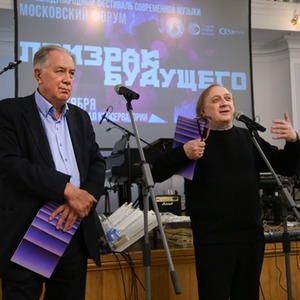
Artistic director — composer Vladimir Tarnopolsky
The Moscow Forum Festival of Contemporary Music emerged in the early 1990s, when most of the Russian composers associated with the notion of “new music” had emigrated. In the words of Yuri Kholopov, at that time “an entire culture emigrated from Russia” — A. Schnittke, S. Gubaidulina, E. Denisov, N. Korndorf, E. Firsova, D. Smirnov, V. Shut, L. Grabovsky, A. Raskatov and others. With virtually no support, the Moscow Forum festival set out to rebuild Russia’s contemporary soundscape from scratch and became the first Russian festival devoted to presenting the newest trends in serious music. The festival was non-commercial on principle, standing against both mass culture and museum-like academicism.
The festival’s aim was not to cater to the established tastes of the general public but to shape them, and to integrate contemporary Russian music into the wider European context. To this end, our programmes sought to give a broad international panorama of new music and, within that context, to promote the music of contemporary Russian composers. The festival paid particular attention to composers of the younger generation. Another priority was the early Russian avant-garde. Killed twice — first by ideological bans and later by the inertia of concert institutions — this brilliant layer of world culture regained its rightful place in our artistic life.
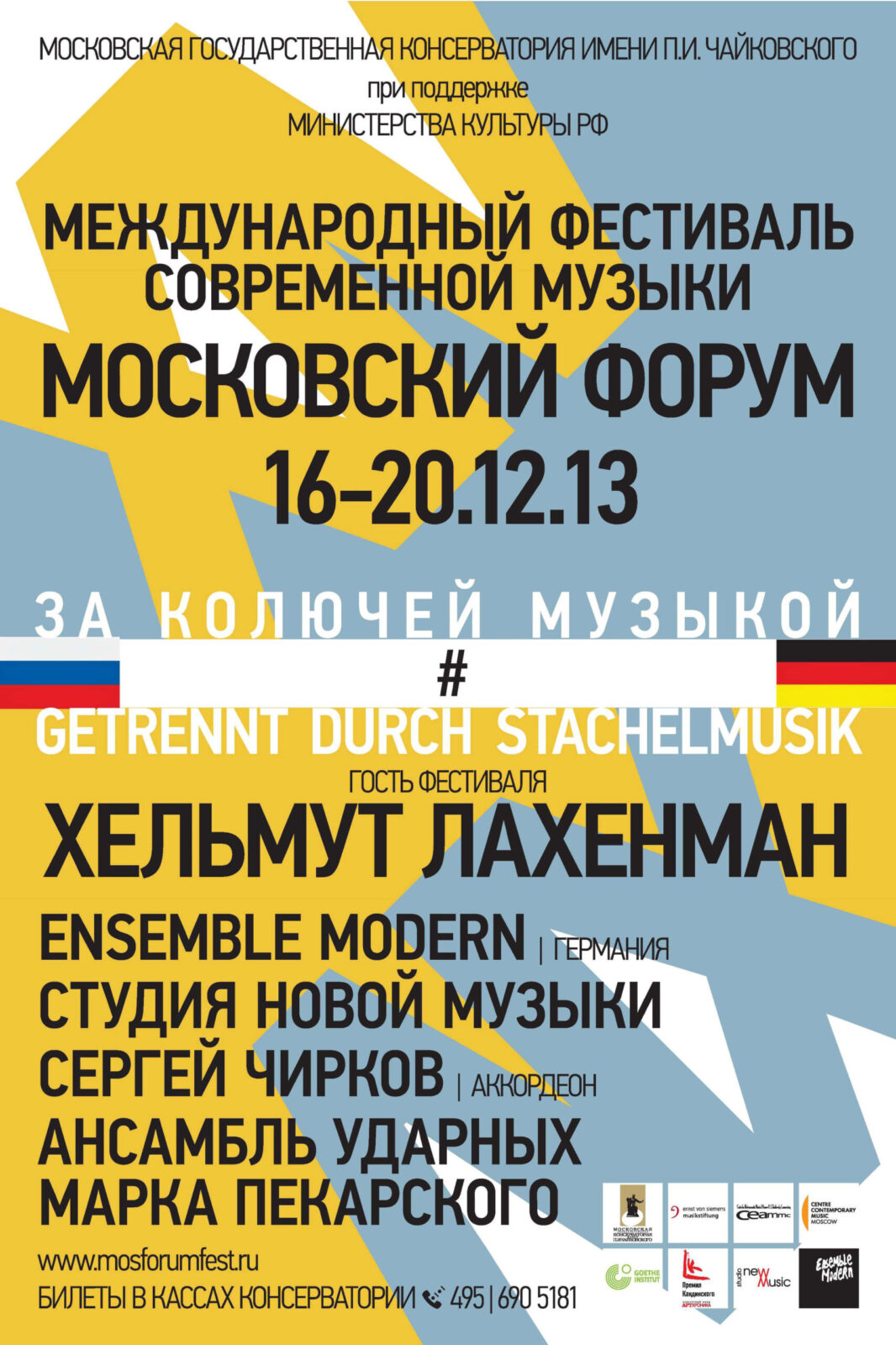
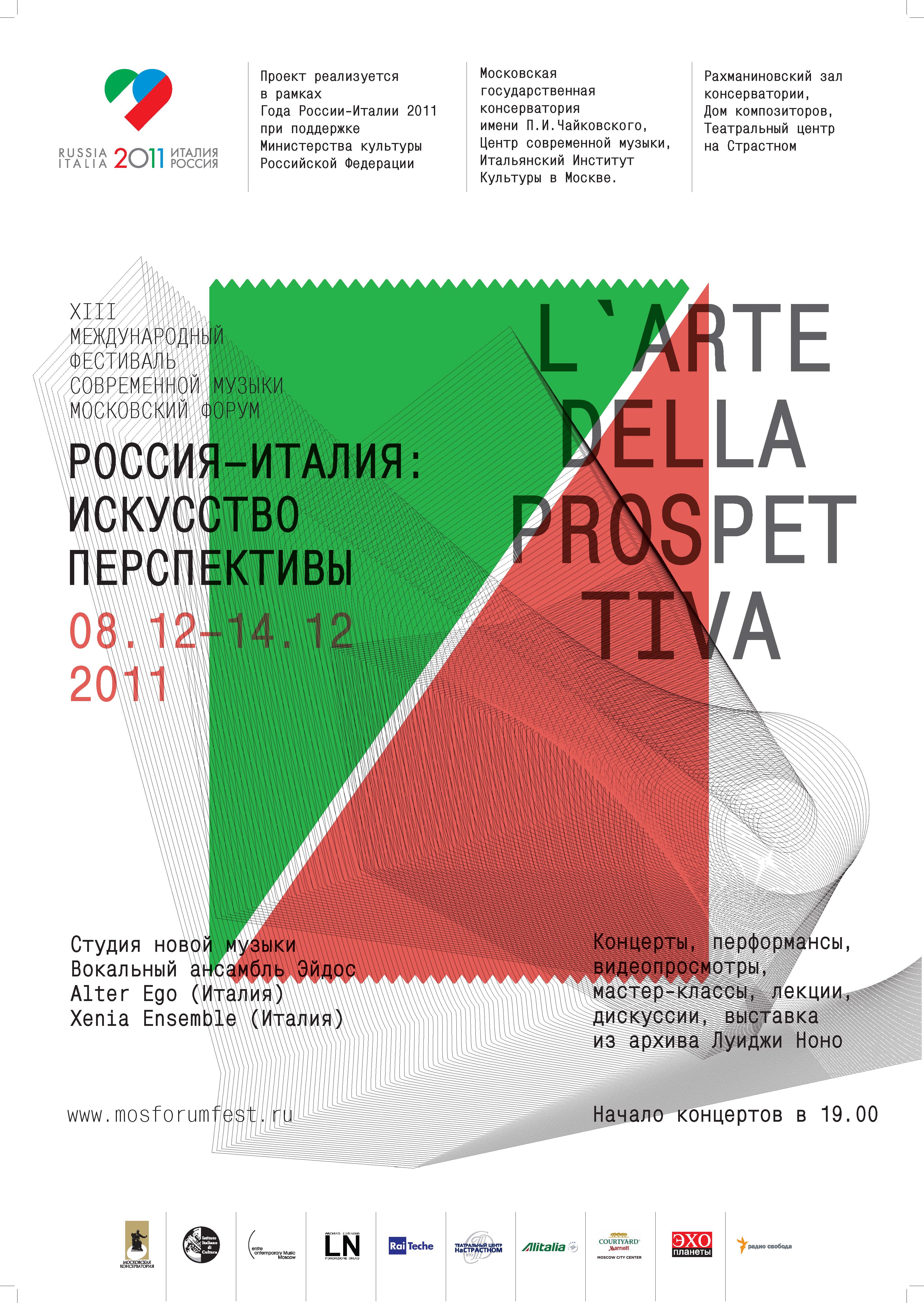
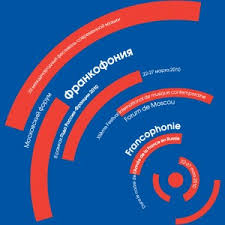
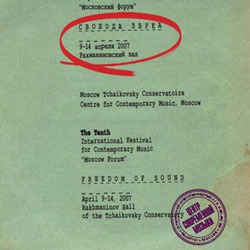
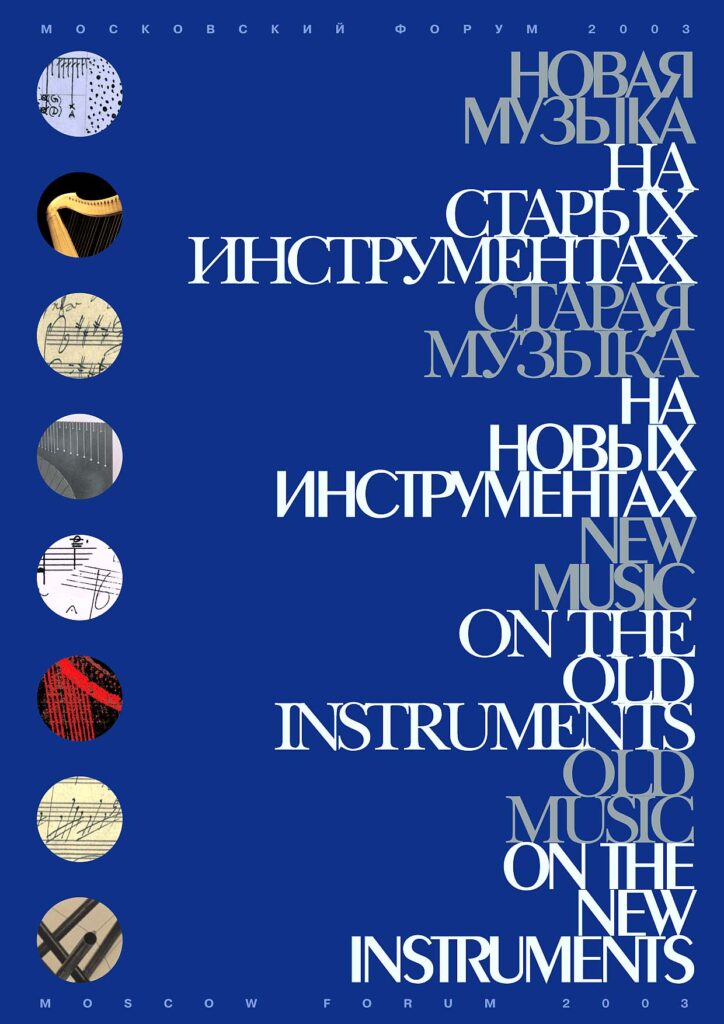
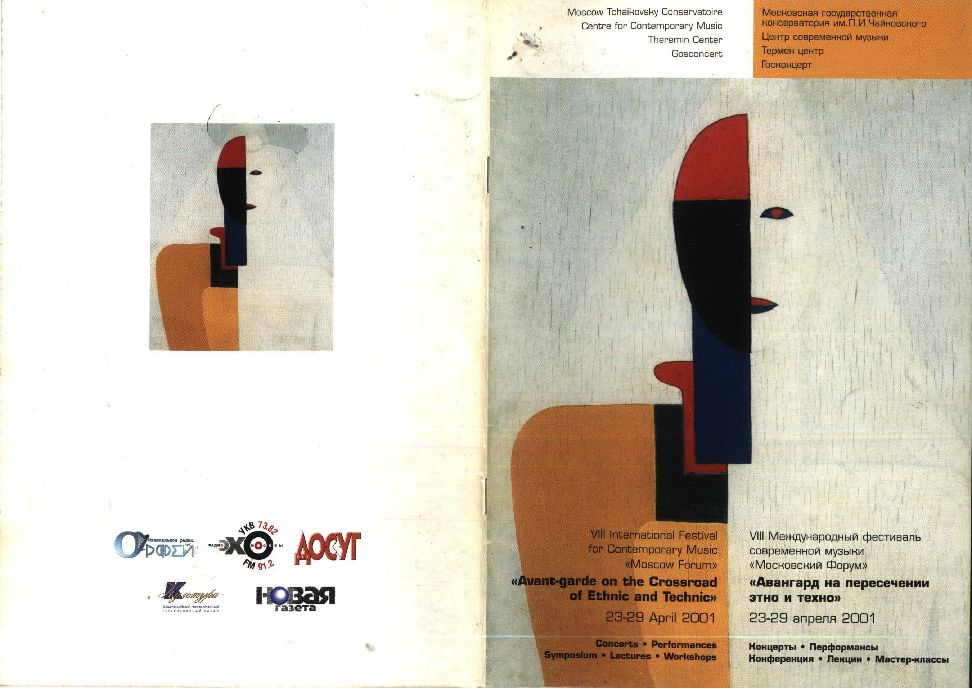
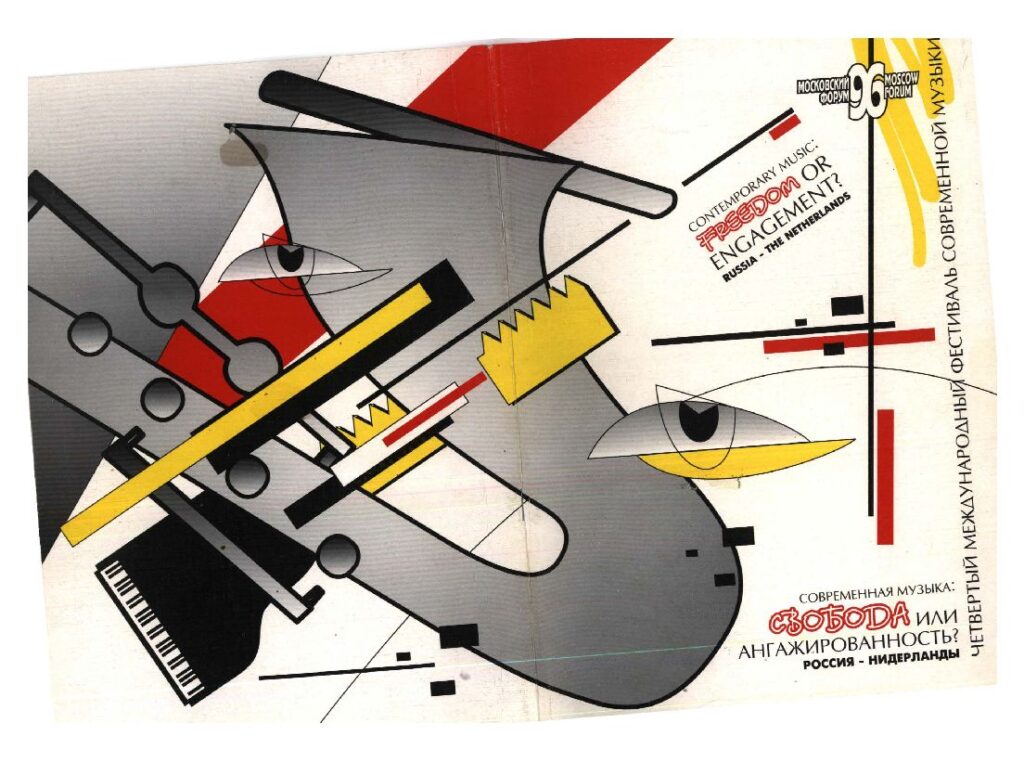
The success of the Moscow Forum was helped by conceptually designed concert programmes. Each year the festival focused on a particular theme around which all the concerts, the conference and other events were built. Over the years the themes included: “Contemporary Music: Freedom or Commitment?”, “The Avant-Garde at the Crossroads of Ethno and Techno”, “Old Music on New Instruments, New Music on Old Instruments”, “Freedom of Sound”, “Orchestra Rehearsal”, “Francophonie”, “Russia – Italy: The Art of Perspective”, “Behind Barbed Music” and others.
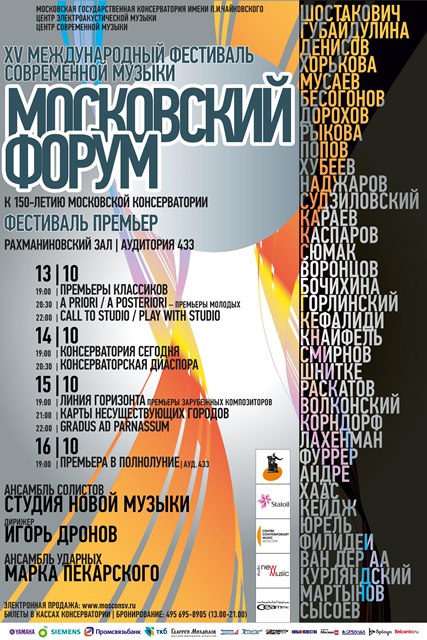
The festival’s high international reputation is attested by its participants. Its guests were leading ensembles, soloists and composers who shape today’s musical landscape. Over the years the festival featured Ensemble Modern (1995, 2013) and Ensemble Recherche (2007), Germany; Schoenberg Ensemble (2003) and Volharding (1996), the Netherlands; Klangforum Wien (1997) and XX. Jahrhundert (1997, 1998), Austria; Fretwork (2003), UK; Alternance (1999), Danel Quartet (2001) and Ensemble Orchestral Contemporain (2010), France; Alter Ego (2011), Italy; as well as leading Russian performers: Mark Pekarsky’s Percussion Ensemble (a regular participant), Opus Posth conducted by Tatiana Grindenko (1999), the Dmitri Pokrovsky Ensemble (2001), the Musica Viva orchestra (2010) and others.
Guest composers included Helmut Lachenmann (2013), Ivan Fedele, Nicola Sani (2011), Klaas de Vries (2003), David Gompper, Tapio Tuomela (2001) and others.
The festival’s core ensemble was the Studio for New Music conducted by Igor Dronov. The festival hosted more than 50 world premieres and more than 100 Russian premieres.
…the Moscow Forum festival of contemporary music opened to a full house (Vremya Novostei)
Every day a full house, and everything is received with delight (Izvestia)
Judging by the fact that even the windowsills in the Rachmaninoff Hall were occupied, there truly is a demand for the avant-garde music of the 20th–21st centuries. And not only among professionals (Kommersant)
The hall was packed, and many of those eager to hear contemporary music had to do so standing. Moreover, all the following concerts — about ten of them — were also stormed by the public: an almost incredible fact for academic avant-garde music, and simply unique for Moscow life in recent years (Kultura)