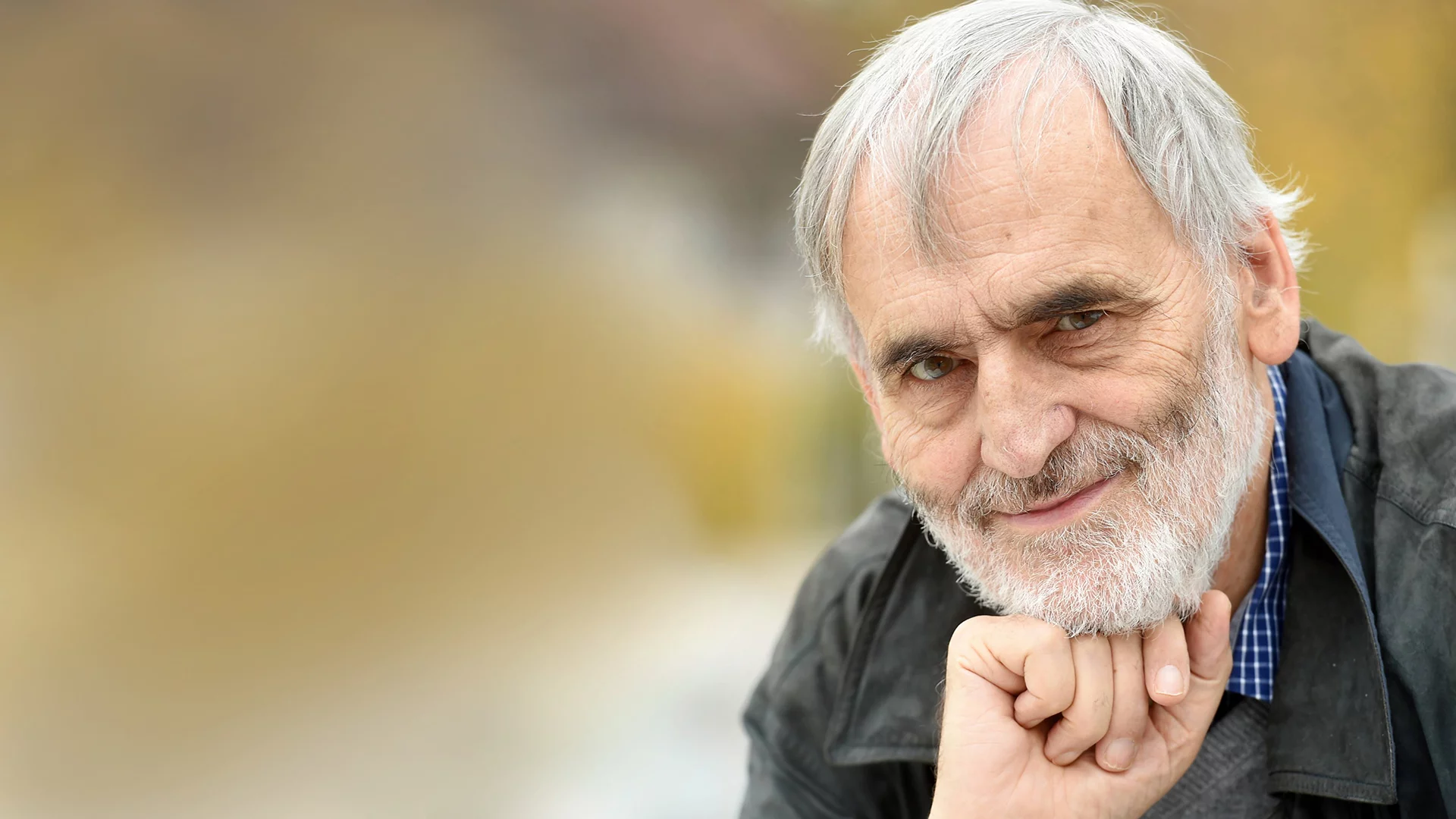

One of the most striking figures of the post-war musical scene, Helmut Lachenmann is an idol of several generations of contemporary composers, “untouchable” among performers and a disturber of the peace among audiences. His aesthetic of renouncing the beautiful (which in the modern world has become a synonym of kitsch) has for several decades provoked musicologists, philosophers and art theorists to search for a new definition of the “musical”.
Lachenmann’s language is harsh and uncomfortable. Its phonemes are knocks, rustles, creaks, grinding sounds… In the extraordinarily inventive, in its own way even exploratory, noise environment of his works, individual musical tones, consonant chords or even quotations from classical music form vivid patches of sound. But all of them acquire their sense and meaning only thanks to the hierarchically constructed system of his musical language. Lachenmann’s works are “ugly” in the eyes of those who think in the categories of the past. In this way the composer seems to stress that the manner of listening, structure and context matter far more than the characteristics of an individual sound. In this sense he appears as a direct heir to the traditions of great German culture, embodied with the highest degree of concentration in the works of the Viennese classics: Haydn, Mozart and Beethoven. By analogy, he could undoubtedly be called a “Viennese classic”.
Programme:
Helmut Lachenmann
…zwei Gefühle…, Musik mit Leonardo for reciter and ensemble (1992/2003)
temA for soprano, flute and cello (1968)
Sakura-Variationen for alto saxophone, piano and percussion (2000)
Ein Kinderspiele, seven little pieces for piano (1980)
Joseph Haydn Canons