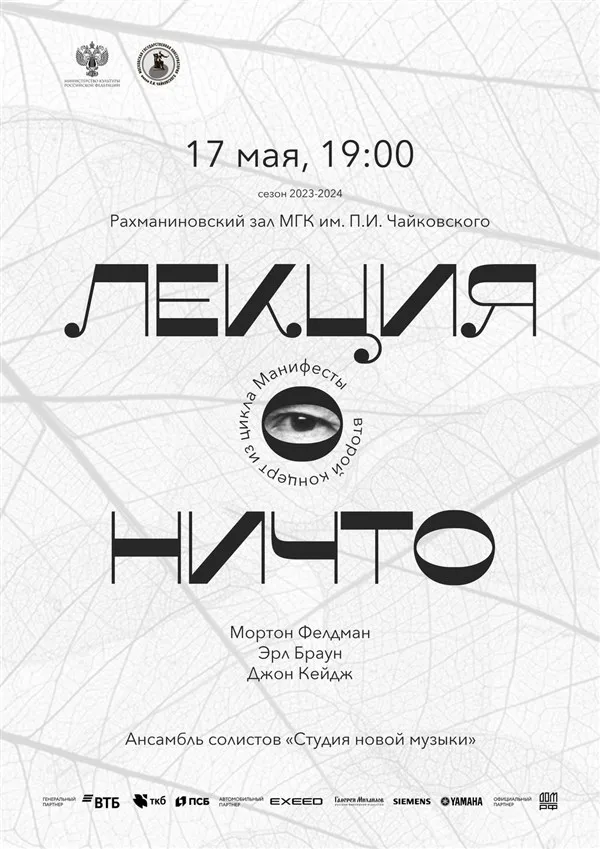
The manifesto is a form of the otherness of art. Why does an artist need words? Perhaps they are necessary at moments of crisis, when his intention cannot be perceived in any other way. The first manifesto of modern times belongs to the realist painter Gustave Courbet (1855), who broke decisively with the academicians and believed that “painting can consist only in the representation of real and existing things”. Anti-academic tendencies also influenced the formation of new groups, such as the Peredvizhniki and the “Mighty Handful” in Russia. But the true flowering of the manifesto came in the twentieth century, a time of global social and cultural transformation. At the beginning of the century noise took the place of instrumental sounds, and the simplicity of fairground art replaced Romantic aesthetics. New artistic forms were brought by the post-war period, by 1968 and by the era of the digital revolution. The manifestos that accompanied artistic innovation constitute a special domain of twentieth-century art. They are an attempt to convey in words what can be expressed only by musical means, a gesture of despair on the one hand and of determination on the other.